


DFG800 Autonomous Floor Grinding Robot for Concrete Polishing
Write a Review

DFG800 Autonomous Floor Grinding Robot for Concrete Polishing
Product Overview
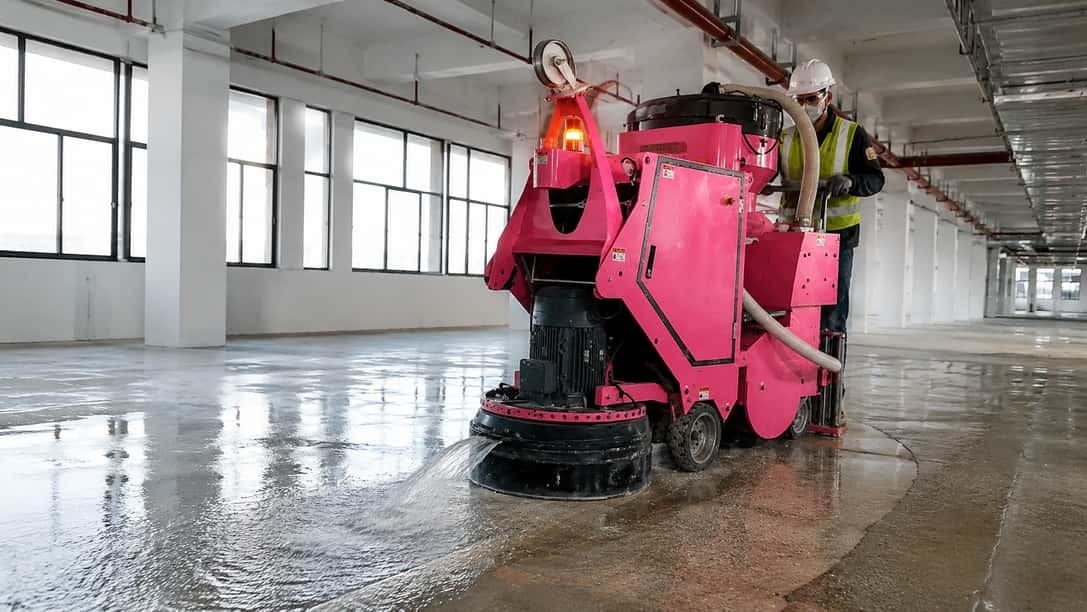
The DFG800 is the grinding half of a densified-concrete floor programme. It grinds, polishes and scrubs a slab and takes the residue away as it goes: dust through a 5.6 kW four-fan extractor into an 80 L bin, wet slurry through a collection and separation stage before it reaches the drain. Pair it with the DFG600 coating robot and the same floor goes from raw slab to sealed surface without a second machine or a second crew.
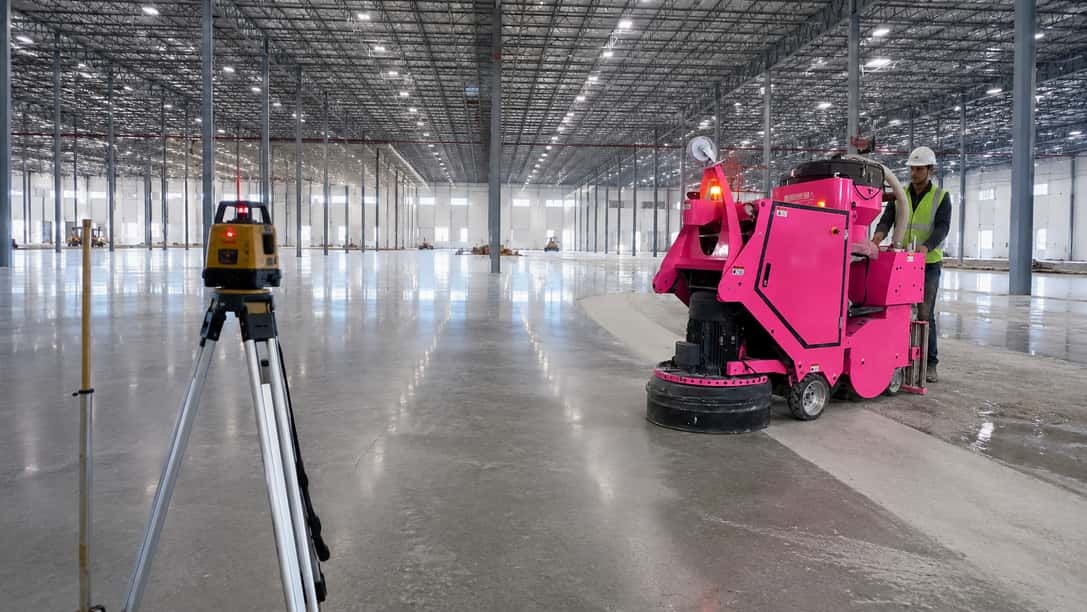
The work happens under an 850 mm head carrying twelve discs, driven by an 18 kW permanent-magnet motor through a 21 kW inverter, at a quoted 230 m² an hour. Navigation is L3: the operator lays the area out on a tablet, the robot plans the passes, avoids what is standing in them and re-plans when the route is blocked.
Key Features
L3, Not Remote Control
SLAM navigation with 2D 30 m and 3D 10 m LiDAR range. The robot plans the area, avoids obstacles and re-optimises the route, so a marked floor can be run unmanned.
5.6 kW of Extraction
An imported four-fan vacuum pulls dust off the skirt into an 80 L bin, and the pickup runs 90 cm wide against an 850 mm head — wider than the cut, so the edge is captured too.
Grind on Mains, Drive on Battery
380 V three-phase feeds the head; a 48 V 30 Ah lithium pack handles travel only. It drives itself to the next bay and up the ramp instead of being craned or rewired.
230 m² an Hour
Twelve discs at 300–2000 rpm under constant-power dual control, which matches torque and disc speed to the load instead of leaving the operator to feel for it.
Application Areas
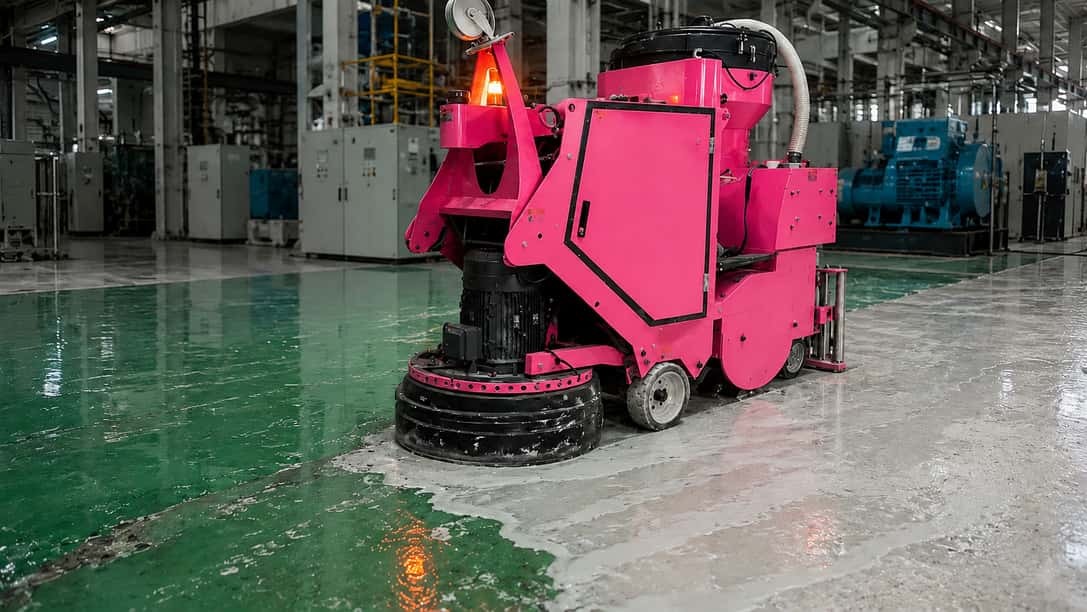
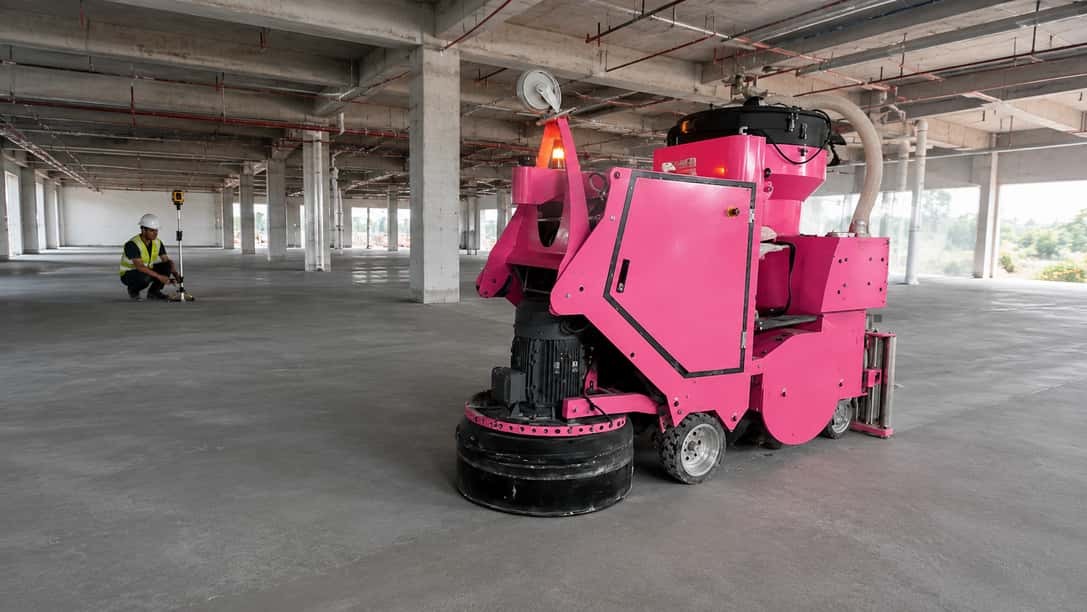
Cast-in-place slab on a new build, old epoxy coating removal, concrete densifier and sealer work, terrazzo, and diamond-sand wear-resistant floors — dry grinding and wet grinding, including polished-concrete work where the slurry has to be collected rather than hosed away.
Gallery
Product Description
Twelve Discs Under 850 mm
The counter-rotating head carries twelve diamond discs across an 850 mm path, turning between 300 and 2000 rpm. An 18 kW permanent-magnet motor drives it through a 21 kW inverter, and constant-power dual control reads the load on the discs and holds torque steady instead of letting a heavy pass bog the motor down.
That is what produces the 230 m² an hour figure without a second operator standing on the machine for weight. The drive train behind it is a forged, hardened-steel gear set on double bearings — the part that decides whether a grinder survives a slab full of aggregate, and the reason the spec sheet calls it out separately.
One Cable in, One Bin Out
Grinding draws from the site supply: 380 V three-phase through a GB-standard 6 mm² four-core cable. The 48 V 30 Ah lithium pack is there for movement only — two 750 W DC servo drives at up to 0.5 m/s, so the machine walks to the next bay, over the ramp and through the door on its own instead of waiting for a crane or a re-cable.
Debris leaves through the 5.6 kW four-fan extractor into an 80 L bin. On wet work the same circuit feeds a sludge collection, filtration and separation stage, so the slurry that comes off a polished slab turns up as solids in a container rather than as a pond the next trade has to vacuum.
ROI & Operational Value
230 m² an hour, quoted. That is the number a floor programme can be costed on, and it does not fall away in the last two hours of a shift the way hand-guided output does.
Dust captured at the skirt. A 5.6 kW extractor and an 80 L bin mean the dust goes in a container, not into the air or across the next bay — which is what usually decides whether a coating can go down the same day.
Relocation without a crane. Battery travel removes the crane lift and the cable re-run between bays. On a multi-level or multi-bay slab that is the cost that never appears in a grinding quote.
Wet and dry in one machine. Slurry separation on board means polished-concrete work does not need a separate wet vacuum and a settling pit, and the floor is ready for the next process rather than waiting to dry out.
Technical Specifications
| Parameter | DFG800 |
|---|---|
| Robot & Autonomy | |
| Machine Type | Self-propelled floor grinding robot |
| Autonomy Level | L3 |
| Navigation | SLAM, area planning, obstacle avoidance, route optimisation |
| LiDAR Range | 2D 30 m / 3D 10 m |
| Control | APP, Android phone or tablet; parameter setting and live data |
| Dimensions (L × W × H) | 1800 × 810 × 1400 mm |
| Net Weight | ≤750 kg |
| Travel Speed | 0–0.5 m/s |
| Travel Drive | DC servo 750 W × 2 |
| Grinding Performance | |
| Grinding Disc Diameter | 850 mm |
| Number of Discs | 12 |
| Disc Speed | 300–2000 rpm |
| Grinding Motor | 18 kW permanent magnet, constant-power dual control |
| Inverter Power | 21 kW |
| Grinding Efficiency | 230 m²/h |
| Drive Train | Forged hardened-steel gears, double-bearing protection |
| Dust & Sludge | |
| Extraction Power | 5.6 kW, four-fan imported unit |
| Dust Box Capacity | 80 L |
| Pickup Width | 90 cm |
| Sludge Handling | Collection, filtration and separation for wet grinding |
| Power & Site Requirements | |
| Power Supply | 380 V AC three-phase for grinding |
| Battery | 48 V 30 Ah lithium, travel and relocation only |
| Recommended Cable | GB standard 6 mm² four-core |
| Surfaces | Cast-in-place slab, epoxy removal, densified and sealed concrete, terrazzo, diamond-sand wear-resistant floor |
Grinding efficiency is the manufacturer's laboratory figure and depends on disc grit, slab hardness and pass count. The robot grinds on site power; the on-board battery is specified for travel and relocation, not for grinding duty.
FAQ
Does it grind dry or wet?
Both. Dry work goes through the 5.6 kW four-fan extractor into the 80 L bin. Wet work, including polished-concrete passes, uses the on-board sludge collection and separation stage. The head, the discs and the 230 m²/h rating are the same either way.
Can it really run without an operator?
It is an L3 machine: the operator defines the area and the pattern in the app, and the robot plans and executes the passes, avoiding obstacles and re-routing when something blocks it. Supervision stays on site — this is not a machine you leave alone in a building.
Why a battery if it needs 380 V?
Because grinding pulls 18 kW through a 21 kW inverter and no on-board pack of this size can carry that. The 48 V 30 Ah battery drives the two 750 W travel servos, so the machine moves between bays, through doors and up ramps on its own. Grinding is done on the cable.
What does the site have to provide?
A 380 V three-phase supply and a GB-standard 6 mm² four-core cable run to the working area. A 1800 × 810 mm footprint and a 1400 mm height clearance for the machine at 750 kg, plus somewhere to empty an 80 L dust bin.
Which floors is it built for?
Bare cast-in-place slab, old epoxy and coating removal, concrete densifier and sealer work, terrazzo, and diamond-sand wear-resistant floors — the standard preparation sequence before a coating or a polish.
How does the DFG600 fit in?
The DFG600 applies the coating; the DFG800 prepares and finishes the surface. Together they cover the full densified-floor process — grind, polish, densify, coat — with the same navigation stack and the same app.
Request a Quote
Tell us the slab area, the finish and the site power available, and we will specify the disc set and the extraction configuration with the machine.
Contact UsAbout Robotmall
Robotmall is a global B2B robotics platform connecting manufacturers, technology partners and businesses worldwide. We support robot sourcing, solution evaluation, deployment coordination and after-sales services.
- Autonomy:
- L3|Disc Diameter=850 mm|Discs=12|Efficiency=230 m2/h|Motor=18 kW|Inverter=21 kW|Extraction=5.6 kW|Dust Box=80 L|Power=380 V AC|Travel=0-0.5 m/s


