

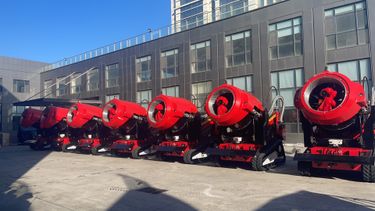
When Humans Can't Enter: How Smoke Exhaust Robots Are Changing Fire Response
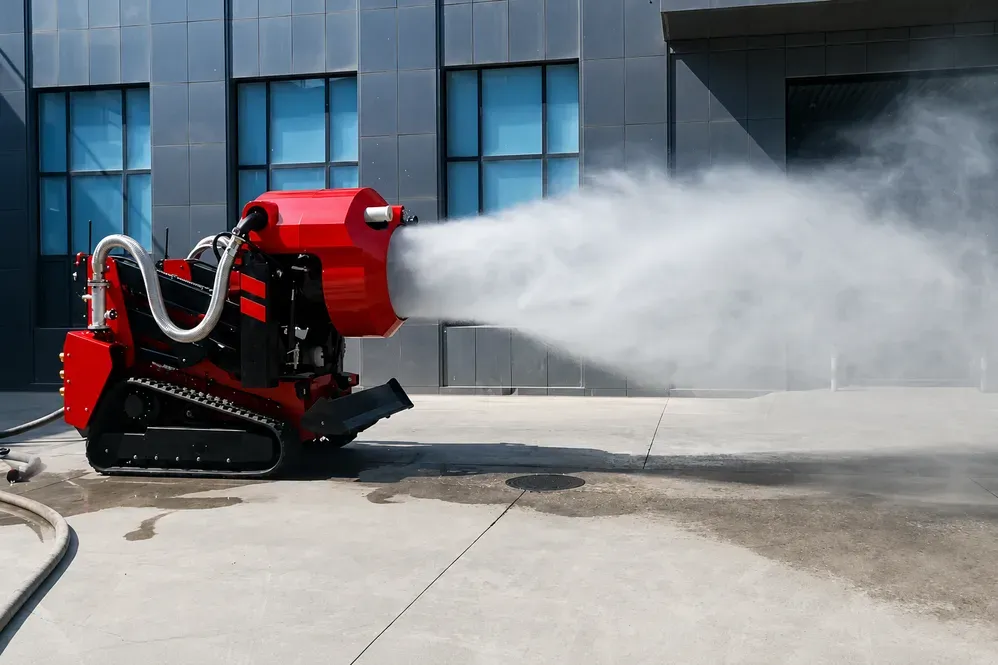
Industrial fires kill firefighters every year. The RXR-YM100000D goes where people can't — clearing smoke, attacking flames, and keeping your team alive.
By Robotmall Editorial · June 17, 2026 · 5 min read

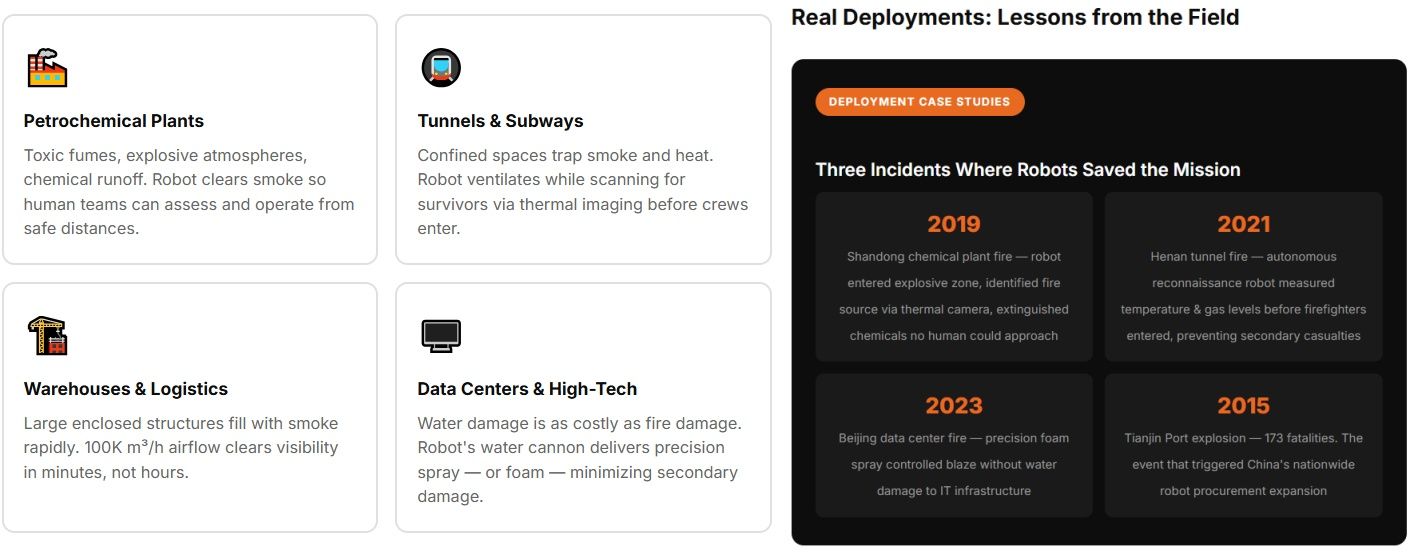
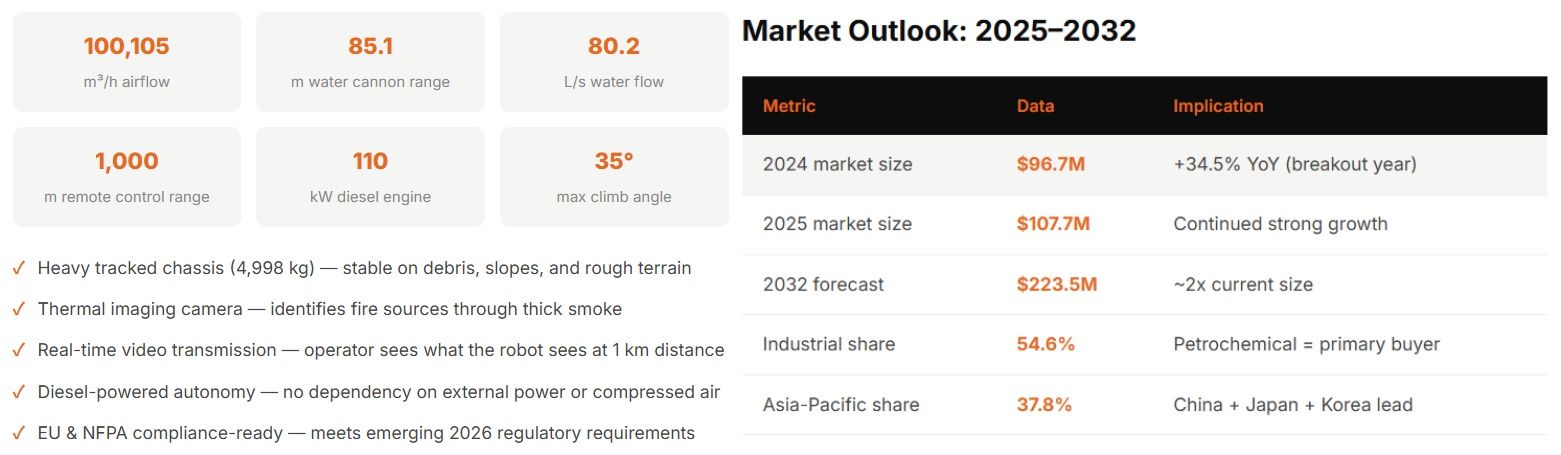
The 2015 Tianjin Port explosion killed 173 people — many of them firefighters who entered zones no human should walk into. That tragedy became a turning point: Chinese emergency services accelerated robot procurement, and the global market responded. Today, the firefighting smoke exhaust robot market is worth $107.7M and growing at 11% CAGR — driven by one simple fact: robots go where humans can't.
Where Smoke Exhaust Robots Deploy — and Why
Over 54% of the global market serves industrial facilities — petrochemical plants, steel mills, chemical warehouses. The rest spans municipal fire departments (25%), commercial buildings (11%), and transport hubs (8%). Every scenario shares one trait: entering the zone is too dangerous for personnel.
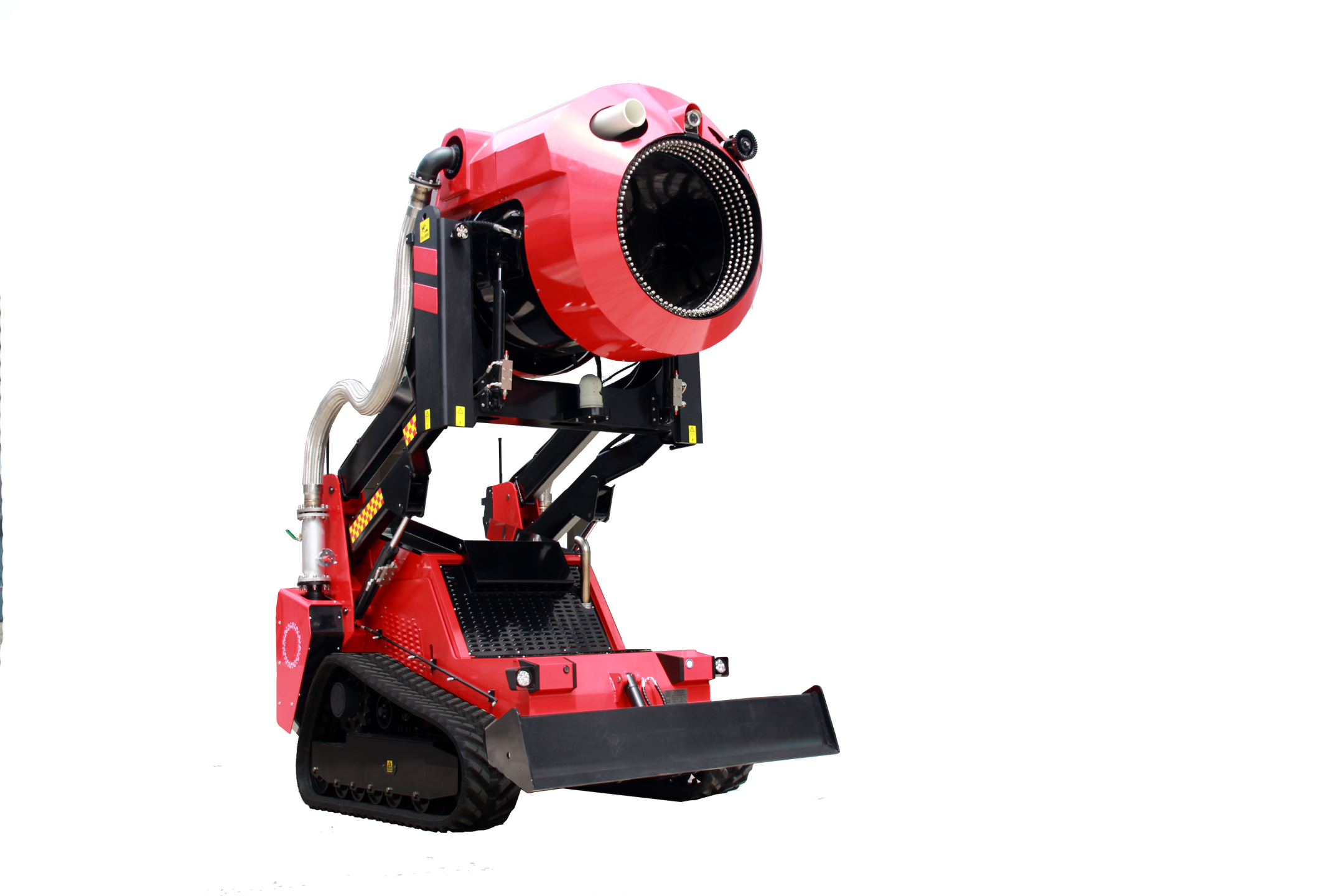
The RXR-YM100000D: Built for the Worst-Day Scenario
RXR-YM100000D HEAVY-Duty FIREFIGHTING SMOKE EXHAUST ROBOT by Guoxing Intelligent
"The question isn't whether you need a firefighting robot. It's whether you'll have one before the worst day arrives."
— Robotmall Editorial, June 2026
Is Your Facility Prepared for the Worst Day? The RXR-YM100000D is available now through Robotmall. Request specs, pricing, and deployment consultation. https://robotmall.com/product/rxr-ym100000d-firefighting-smoke-exhaust-robot
robotmall.com · Orbio Systems, Ontario CA · Sources: PMarketResearch, QYResearch, Guoxing Intelligent, NFPA, EU Directive 2024/38 ← Back to Robotmall