

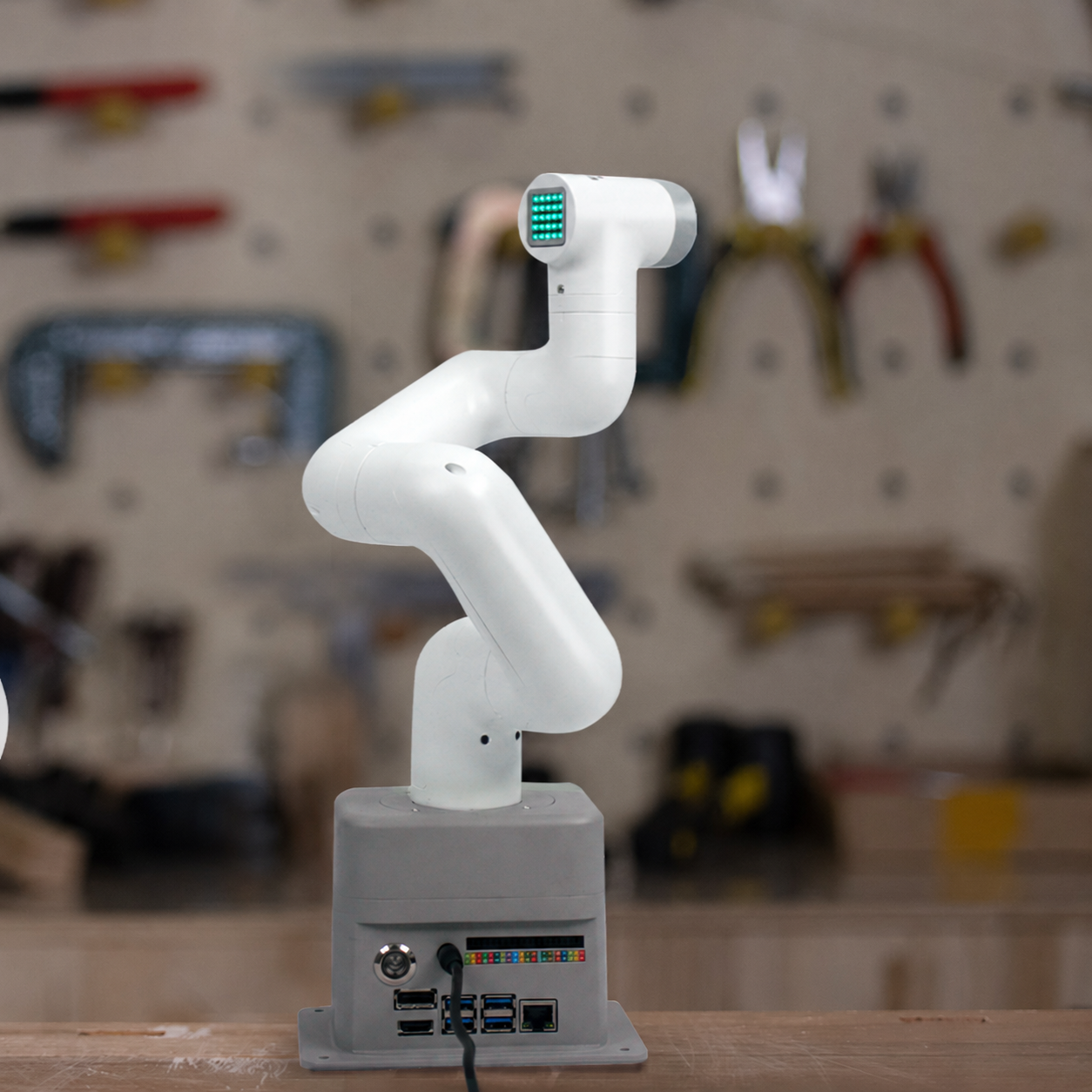
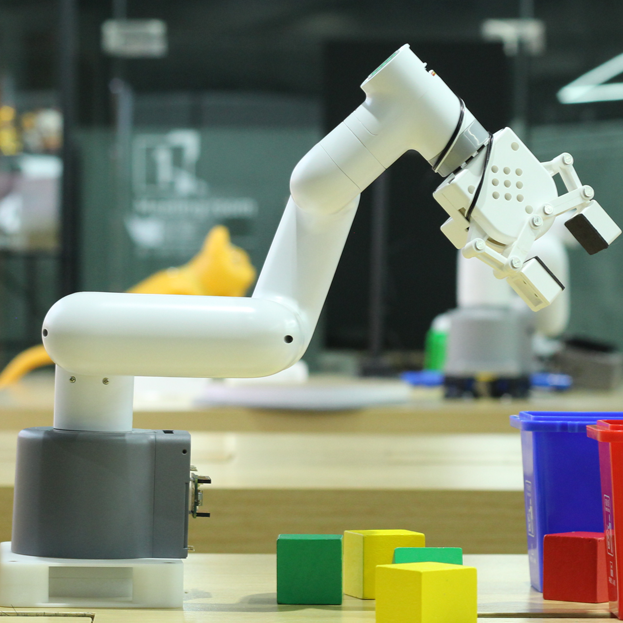


Key Advantages
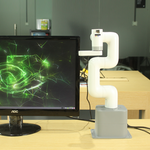
128-Core NVIDIA GPU for Edge AI
Jetson Nano variant runs real-time object detection and image recognition entirely on-device. Train and deploy vision models without external hardware — GPU-accelerated inference at the edge.
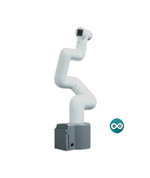
Full Arduino Ecosystem Compatibility
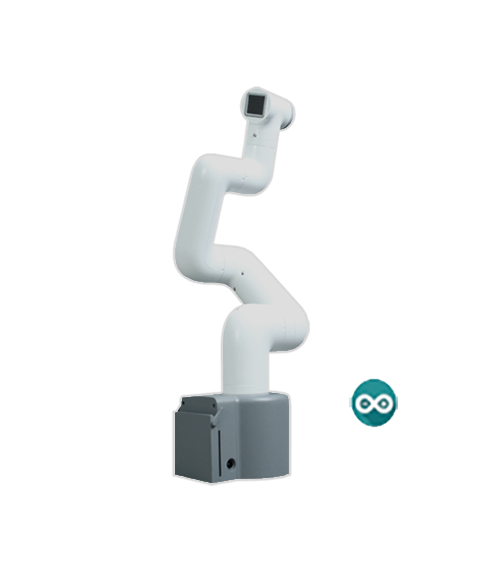
Supports UNO, MEGA2560, and MKR boards out of the box. Leverage thousands of existing Arduino libraries, shields, and community resources — the world's largest open-source hardware ecosystem.
780 g Ultra-Lightweight Body
The Arduino variant weighs just 780 grams — the lightest in the myCobot lineup. Move it between workstations, pack it for field demos, or mount it anywhere with minimal support.
Native ROS 1 + ROS 2 on Ubuntu
Jetson Nano runs full Ubuntu Mate 20.04 with ROS 1 and ROS 2 pre-configured. Drop into any existing ROS pipeline, access 90+ control interfaces, and integrate with Gazebo simulation.
Multi-Language Visual Programming
myBlockly drag-and-drop interface supports Python, JavaScript, C++, C# generation. Arduino IDE for embedded developers; OpenCV-ready for computer vision engineers — one platform, no coding silos.
±0.5 mm Precision at 280 mm Reach
Same 6-axis kinematics across both variants deliver repeatable sub-millimeter positioning. From PCB assembly to lab automation, the mechanical core is proven across thousands of units worldwide.
Proven Across Industries
From GPU-accelerated AI research to Arduino-powered embedded learning, two controllers open two worlds — both built on the same precision 6-axis platform with 280 mm reach and ±0.5 mm accuracy.
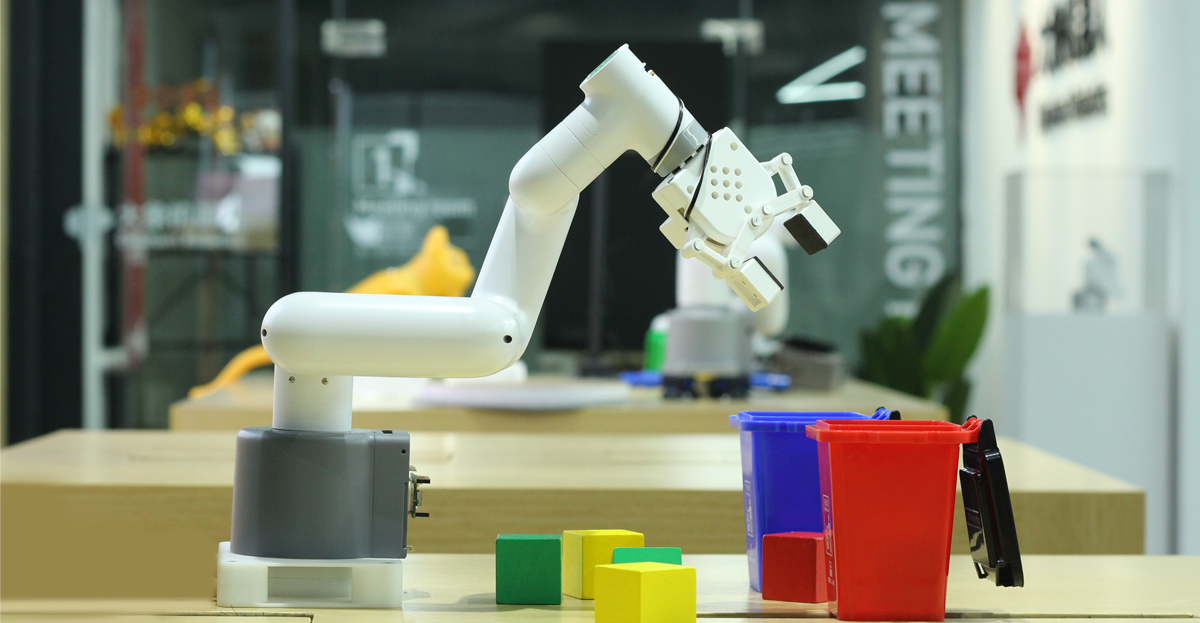
AI & Computer Vision Research
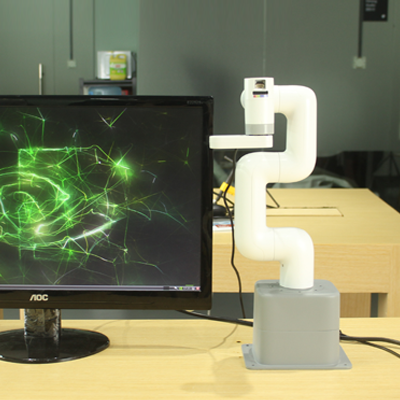
Jetson Nano's 128-core Maxwell GPU and OpenCV integration turn this arm into an edge AI workstation. Run object detection, train custom vision models, and deploy real-time inference — all within the robot's onboard processor, no external GPU cluster required.
Jetson Nano's 128-core Maxwell GPU and OpenCV integration turn this arm into an edge AI workstation. Run object detection, train custom vision models, and deploy real-time inference — all within the robot's onboard processor, no external GPU cluster required.