

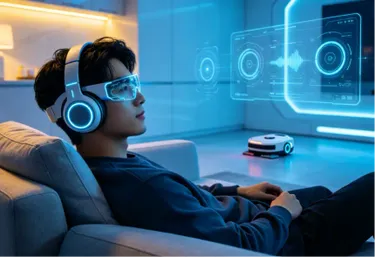
The Technology Is Ready. Rehabilitation Robotics Has Arrived.
For years, rehabilitation technology was described as "promising but not yet proven." That framing is outdated. Brain-computer interface devices now hold regulatory approval. Robotic gait trainers are backed by meta-analytic evidence. Insurance covers the procedures. The technology works — and the question now is how quickly you can put it to work.
China's BCI market is projected to surpass ¥50 billion in 2026, global rehabilitation robot funding reached $42.3 billion last year (up 28.6%), and the effect size of robotic therapy over conventional methods stands at SMD 0.59 — a clinically meaningful margin. Meanwhile, BCI control accuracy among SCI patients hits 95.2%, nearly matching healthy subjects. These aren't projections. They're published data.
BCI: From Lab to Clinic
In March 2026, China's NMPA approved the NEO-ONE SCI system by Neuracle — the world's first invasive BCI medical device cleared for commercial use, ahead of Neuralink's FDA trials. The system uses an epidural implant (no brain tissue penetration), paired with a pneumatic glove and AI decoder, enabling tetraplegic patients to grasp, hold, and drink using only their intent.
| Parameter | NEO-ONE SCI |
|---|---|
| Implant method | Epidural — no brain tissue penetration |
| Indication | Cervical SCI (C2–C6) tetraplegia, ages 18–60 |
| Clinical record | 36 implants · 8,000 cumulative safe days · 0 serious adverse events |
| Functional outcome | Mind-controlled grasp — 100% response rate |
| Home readiness | Independent operation within 1 month post-surgery |
| Neural reorganization | Partial spontaneous hand recovery observed in some subjects |
A parallel study published in Annals of Neurology (January 2026) — the first RCT evaluating BCI-controlled lower-limb exoskeleton training — confirmed that BCI+exoskeleton outperforms standalone exoskeleton across all measured outcomes: lower extremity motor score, 6-minute walk distance, 10-meter walk speed, and depression scores. Electrophysiology analysis verified cortical network restructuring, not just functional improvement.
Robotic Rehabilitation: The Evidence
A 2025 meta-analysis covering 13 RCTs and 424 stroke patients (Frontiers in Human Neuroscience) reached a clear conclusion: robotic-assisted therapy delivers clinically meaningful improvements that conventional rehabilitation cannot match.
| Outcome | Improvement | Significance |
|---|---|---|
| Fugl-Meyer (Upper Extremity) | +7 to +10 | Exceeds MCID threshold |
| Berg Balance Scale | +6–7 | Meaningful functional change |
| 10-Meter Walk Test | −2.7 seconds | Gait velocity gain |
| Modified Barthel Index | +12–15 | ADL independence |
Rehabilitation Assistive Robots
The term "rehabilitation robot" actually covers several distinct categories, and the boundaries between them are blurring fast — especially as BCI integration enters the picture.
| Type | Primary function | BCI integration |
|---|---|---|
| Gait Training Robots | Repetitive stepping pattern training for stroke/SCI | Intention-driven stepping cycles |
| Lower-Limb Exoskeletons | Wearable mobility assistance and rehab | Mind-controlled ambulation |
| Upper-Limb Rehab Robots | Arm and hand recovery post-stroke | BCI grasp-and-reach decoding |
| Assistive Walking Aids | Sit-to-stand and daily mobility support | BCI-initiated standing transitions |
Key Milestones
- Oct 2023 — NEO completes first domestic BCI implant surgery
- Aug 2024 — NEO enters NMPA Innovative Device Special Review
- 2025 — BCI+exoskeleton RCT published in Annals of Neurology
- Mar 2026 — NEO-ONE SCI: world's first invasive BCI commercial approval
- Mar 2026 — BCI procedure fees added to national insurance (¥6,000–6,600 per procedure)
- Jun 2026 — Neuracle files for STAR Market IPO, ¥2.5 billion fundraising target
Market Forces
Three things are converging at the same time. First, policy: national insurance now covers BCI procedures with defined fee codes, long-term care reimbursement reaches roughly 70%, and provinces are adding rehabilitation devices to reimbursable catalogs. Second, supply chain: over 70% of key rehabilitation robot components are domestically sourced, and exporters like Fourier Intelligence, DaAi Robotics, and MileBot hold CE and FDA certifications. Third, demand: China faces a 40-million-person rehabilitation care gap, and aging populations in the US, Germany, Japan, and Australia are generating demand that manual therapy staffing simply cannot fill.
Projected market size tells the story — ¥949 billion by 2035 for China's BCI sector alone, growing at 35.8% CAGR.
Available on Robotmall.com
MAX Series Gait Assist Robot — Lower extremity rehabilitation with clinical-grade gait pattern training. View product
Electric Walking Aid Robot — Powered sit-to-stand lift with gait training support for daily mobility. View product
AstroShell Alpha 1 Exoskeleton — Wearable leg exoskeleton for personal mobility and rehabilitation. View product
VIGX π Sports Assist Exoskeleton — Performance augmentation exoskeleton for active lifestyle support. View product
The Bottom Line
Three thresholds crossed at once. Regulatory — BCI and robotic rehabilitation devices hold commercial approval. Clinical — meta-analytic evidence confirms superiority over conventional therapy. Economic — insurance coverage and domestic manufacturing remove the adoption barriers that held this sector back for years.
The technology is not coming. It's here. The advantage belongs to those who deploy it first.
Published by robotmall.com · Global B2B Robotics Hardware Platform · Warehouses: US, Germany, Japan, Australia, Shenzhen HQ
Sources: NMPA, Frontiers in Human Neuroscience, Annals of Neurology, China Industry Research Institute, Neuracle IPO prospectus