

Robots Unleashed: China's Speed Meets State Power
July 2, 2026 — Beijing
From the Global Digital Economy Conference to the dawn of mass production — an industrial revolution that's accelerating faster than anyone predicted.
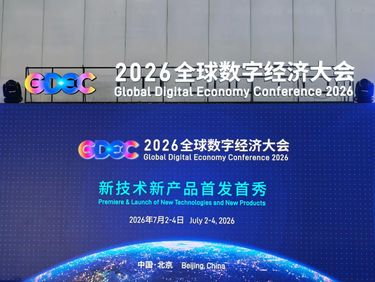
On July 2, 2026, two major expos opened on the same day in Beijing and Shanghai, both headlined by the same protagonist: robots. This wasn't coincidence — it was a signal. The robotics industry is surging at unprecedented speed, and behind it is the deliberate, systematic hand of a nation-state.
Part I — Speed: From Lab to Production Line in a Single Turn
If 2025 was the year of robot demos, 2026 is the true year of mass production. The pace has outpaced nearly every forecast.
market size
from $54.4B in 2025
units shipped
(RMB, ~$4,100 USD)
Price Collapse: The Consumer Threshold Is Vanishing
Unitree slashed the R1 humanoid robot from 39,900 to 29,900 RMB — roughly the price of a premium laptop. You get 25kg of hardware, 26 high-precision joints, and multimodal LLM interaction. This price curve looks exactly like smartphones circa 2014.
Cross-Industry Giants: Carmakers Are Becoming Robot Makers
BYD officially confirmed its humanoid robot project, codenamed "Yao Shun Yu". This isn't impulse — BYD started the program in 2022, built a 4,000-person R&D team, and has iterated to its 7th-generation prototype. In 2026, they plan to deploy 20,000 units in their own factories, leveraging 60% parts commonality with their EV supply chain.
Li Auto's robotics team, codenamed "Nexus," has been in stealth development for nearly a year. Carmakers entering robotics isn't trend-chasing — motor supply chains, battery energy management, and autonomous driving perception stacks all transfer directly.
Capital Frenzy: Money Is Chasing Technology
| Company | Raise | Highlight |
|---|---|---|
| NEURA Robotics (Germany) | $1.4B | Largest single humanoid raise in history; NVIDIA, Amazon, Goldman Sachs |
| Kunlun Xing Robotics | ~RMB billions (3 rounds) | Founded 90 days ago; one round every 30 days — fastest unicorn record |
| Shihang Intelligent (Marine) | Over RMB 1B | Single-round record for marine robotics globally |
The velocity of capital tells you one thing: the market is no longer betting on robots as "the future." It's investing in them as "the present."
Part II — State Power: This Isn't a Spontaneous Revolution
The robotics surge isn't pure market behavior. The depth and systemization of state involvement may be globally unique.
- Signal 1: Robots placed at the core of "First Launch" platform — alongside world models and full-stack simulation tech, as the conference's headline technology debut
- Signal 2: Nearly 20 industry standards released simultaneously — transitioning from "wild growth" to "rules first," paving the road for scale
- Signal 3: ~40 international high-level delegations — not a domestic trade show, but a display of global industrial discourse power
Standards First: Who Writes the Rules, Owns the Future
The conference released nearly 20 industry standards spanning AI models, robotics, and smart manufacturing. Three flagship documents were published: Global Digital Economy City Development Report, Global Digital Economy Lighthouse Cases, and Global Digital Friendly City Evaluation Guidelines. These aren't ordinary white papers — they're a framework for industrial discourse, originating from China, aimed at the world.
When an industry is still in its early explosion, standard-setting authority is the highest-dimensional competition. China began pushing global standards at a stage when robot shipments hadn't even reached 20,000 units — a pace more aggressive than the 5G standards race.
Infrastructure: Compute as National Power
Beijing's digital economy grew at 9.3%, with a compute scale of 70,000 PFLOPS. Behind this number is sustained state investment in AI compute infrastructure. No compute means no large models. No large models means robots are just "moving metal." The compute base is the invisible foundation of the entire robotics industry.
Supply Chain Dominance: 70% of the Voice
China's supply chain controls 70% of global humanoid robot components — from harmonic reducers to servo motors, force sensors to integrated joints. The cost advantage and iteration speed of Chinese manufacturing form a barrier no country can ignore. This wasn't achieved by any single company. It's the release of decades of momentum accumulated across the entire manufacturing system.
International Layout: From "Participating" to "Leading"
This architecture — Beijing main venue + overseas sessions + domestic satellite sessions + year-round programming — shows the state isn't treating robotics as a "conference topic." It's treating it as a long-term strategic project being systematically advanced.
What This Means
For anyone in the robotics space, July 2, 2026 is a date worth remembering.
Two signals flashed simultaneously: the mass-production inflection point has arrived on the technology side; the national will has been made explicit on the policy side. When these two forces converge, industry growth stops being linear — it goes exponential.
China's robotics story no longer lives in lab demo videos. It's becoming 20,000 units working simultaneously on factory lines. It's becoming a consumer product you can take home for 29,900 RMB. It's becoming a global standard exported from Beijing to Geneva.
This isn't one company's victory. It's a nation using systematic force to drag an industry from "the future" into "the now."
And the only question left is: where will you stand on this curve?