

NVIDIA Just Open-Sourced the Humanoid Robot Blueprint — Here's What It Means
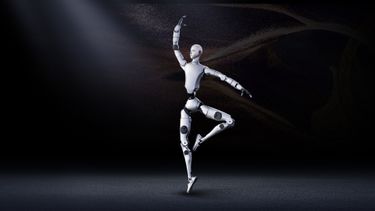
Jensen Huang took the stage at Computex this month and showed off something unusual for NVIDIA — a walking, two-armed machine standing nearly six feet tall. The Isaac GR00T reference platform pairs Unitree's H2 Plus frame with a pair of Sharpa Wave hands out of Singapore. But here's the thing: you can't actually buy one. At least not as a finished product.
That's the point. Huang wasn't launching a gadget. He was handing over a blueprint — an open design that any lab or company can pick up, modify, and run with. True to form, the money isn't in the metal. It's in everything underneath it.
What's under the hood
This thing is built to move. Unitree's frame stands 1.82 meters tall at 68 kilos, legs pushing 360 newton-meters of torque. Each arm lifts 7 kilos comfortably, 15 at peak. Those Sharpa hands pack 22 degrees of freedom apiece — 44 across both — which is wildly dexterous for a research rig.
Inside sits a Jetson AGX Thor T5000 running Blackwell silicon. Fourteen Arm cores, a block of unified memory, sipping anywhere from 40 to 130 watts. Sensor fusion, motor control, inference — it all happens locally. The cloud isn't part of the equation, which means latency isn't either.
Why a reference design beats a product launch
Anyone who's worked in this space knows the pattern. Every lab builds its own stack from scratch. Nobody shares training data. Scaling up means starting over each time. NVIDIA looked at that mess and did what it always does — shipped a common baseline.
The GR00T toolkit covers the full loop. Foundation models live on GitHub (train them, tweak them, contribute back). Isaac Sim and Lab handle virtual testing before anyone touches physical hardware. Teleop captures demonstration runs for imitation learning. And Isaac ROS bridges the gap from policy to real-world motion.
Unitree starts shipping these rigs at the end of the year. The first batch is already claimed — Stanford, ETH Zurich, UCSD, and Skild AI are on the list. These aren't marketing partnerships. These are labs that have been assembling their own franken-robots for years and are frankly tired of it.
What it means if you're not a researcher
History on this is pretty clear. When this company settles on a standard, it sticks. CUDA ate GPU computing. Isaac Sim became the default simulation environment. If GR00T follows the same arc — and every sign says it will — then the cost of building capable machines drops across the board. Better components, shared models, fewer dead ends.
The reference kit won't replace something like a LIMX TRON 2. It doesn't need to. It lowers the floor so the ceiling can move up — smarter models, faster iteration, and a supply chain that scales because enough people are finally building on the same foundation. The blueprint's out. The rest is just execution.
Hardware that ships, not just schematics
Browse our collection of production-ready machines built to work out of the box.
Explore Business Robots