

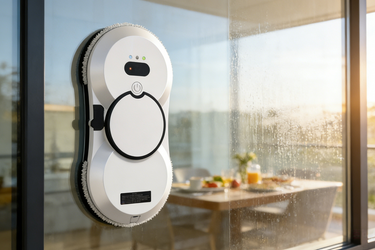
Glass, Meet Intelligence. The Window Cleaning Robot That Sees, Sprays & Stays.
Glass, Meet Intelligence. The Window Cleaning Robot That Sees, Sprays & Stays.
Let's be honest — nobody wakes up excited to clean windows. It's the chore you postpone until you can barely see through the glass, and then it's an hour of stretching, ladder-balancing, and wondering if that streak was there before or if you just made it worse.
Now multiply that by twenty stories. Or a hundred. That's the reality for millions of high-rise residents and building managers who pay crews hundreds of dollars per visit — only to watch the rain undo everything two days later.
Something had to give. And it did.
So what makes a window robot actually good?
Not all of them are. Plenty are glorified RC cars with a microfiber pad. Here's what separates the real deal from the toy aisle.
- It doesn't drip. It mists.Most cleaning robots dribble water onto glass like a leaky faucet. The KYD series uses ultrasonic atomization — water shattered into droplets under 15 microns. We're talking fog, not puddles. The mist saturates dirt on contact, the squeegee wipes it clean, and your windowsill stays dry. The industry noticed: ultrasonic spray adoption jumped 41.5% among new models this year.
- It sticks. Really sticks.Vacuum suction is the gold standard — 98.7% adherence across virtually all glass types. KYD delivers 2,500–3,000 Pa of negative pressure. That's enough bite for frameless edges, textured surfaces, and slightly curved panes. If you've ever held your breath watching a suction cup slowly peel off, you understand why this matters.
- Power cuts. The robot doesn't.A sudden outage on the 15th floor shouldn't turn a $400 tool into a $400 lesson in gravity. KYD's lithium backup keeps suction alive for 20–30 minutes after the cord loses power — more than enough time to walk over and grab it. In commercial settings where glass can run 500 sqm per floor, this isn't a nice-to-have.
Who's buying these things?
Residential leads with about 59% of the market — simple math: live on the 18th floor, pay $300 per clean, or buy a robot once.
Commercial is where growth lives, though. Window cleaning accounts for 15.4% of all maintenance insurance claims in the U.S. That's a number building owners notice — and why nearly half of American commercial properties are now exploring robotic alternatives. The robot just works. No overtime. No sick days. No harness inspections.
Where this is all headed
Three things are converging, and they're converging fast.
AI that sees dirt. 72% of connected robots now run software that recognizes heavy grime and dials up suction automatically. The machine is literally learning what "dirty" looks like.
One robot, many surfaces. The same unit that cleans your windows will soon handle tile, glass railings, and solar panels. R&D investment in cross-surface capability is up 55% since 2023.
Cleaning as a service. Commercial clients skip the capital expense and subscribe instead — robots deployed, maintained, and upgraded under contract. Just clean glass, every month, predictable cost.
And all of this is happening while 72.5% of developed nations tighten workplace safety regulations around height exposure. Every new rule nudges another building toward automation.
The glass isn't getting smaller. And frankly, we're all tired of leaning out of windows with a squeegee.
Ready to let a robot handle it?
KYD Series available now. Residential, commercial, fleet orders — all welcome. Property managers, ask about bulk pricing.
View the KYD Series →Market data: Market Growth Reports, MRFR, Verified Market Reports