

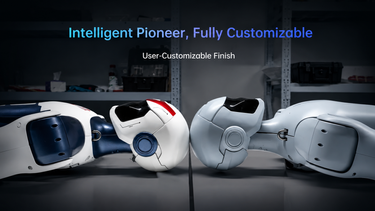
When China Mobile published the bid results in June 2025, the industry's reaction wasn't euphoria — it was a quiet sense of arrival. AGIBOT (智元机器人) and Unitree (宇树科技) had split a ¥124.05 million contract to supply 400 humanoid robots to a wholly-owned subsidiary of the world's largest telecom operator. It was the largest publicly disclosed single humanoid robotics order in China's history — and the first credible answer to the question the entire industry has been dodging: who actually pays for these machines?
The Deal Structure
The procurement was structured as an "ODM service purchase" — China Mobile isn't buying off-the-shelf products. It's locking in three years of manufacturing capacity (2025–2027), with staggered delivery tied to deployment milestones.
| Package | Winner | Budget | Deliverables |
|---|---|---|---|
| Package 1 | AGIBOT | ¥78M | 200 full-size bipedal robots + voice kits, dexterous hands, depth cameras, LiDAR |
| Package 2 | Unitree | ¥46.05M | 200 small-size bipedal robots + compute backpacks + dexterous hands |
| Total | ¥124.05M | 3-year ODM service contract, awarded to China Mobile's 100%-owned subsidiary | |
The purchasing entity is 100% state-owned. This isn't a venture fund placing a bet — a national telecom giant is buying robots the way it buys base stations.
Why a Telecom Operator Wants Robots
China Mobile's core strengths are network infrastructure and AI large models — not robot manufacturing. By purchasing mature hardware from AGIBOT and Unitree, it can focus on developing the "embodied brain." In simpler terms: China Mobile is buying bodies for its brains.
Its technology stack already includes the Jiutian multi-modal foundation model, a robotics-specific "Lingtao" VLA model, real-time inference systems, and a 5G embodied AI network for end-edge-cloud collaboration. The 400 robots are not endpoints — they are distributed data collection nodes that will generate real-world training data to improve China Mobile's embodied AI models.
The real asset isn't the hardware — it's the data.
400 robots in real-world scenarios will generate embodied AI training data that money can't buy. Once this data flywheel spins, late entrants face an increasingly high barrier.
Can They Actually Deliver?
AGIBOT ramped from 1,000 units (Jan 2025) to 15,000 units (Jun 2026) in 18 months, powered by an exclusive ODM partnership with Ningbo Huaxiang, a major automotive parts supplier. Unitree shipped 5,500+ units in 2025 at a gross margin near 60%, with plans to scale to 75,000 units/year. The China Mobile order represents less than 3% of current capacity — manufacturing is not the bottleneck.
"Manufacturing is no longer the bottleneck. It has become a genuine core competitive advantage."
What This Means
1. The "Who Pays?" question has an answer
For two years, the industry answered "can we build it?" China Mobile's order provides the first institutional answer: state-owned enterprises with scenario demand and AI ambitions will be the first major buyers.
2. Deployment outcomes, not production, define the next 18 months
With AGIBOT at 15,000 units and Unitree at 6,500+, the question has shifted from "can they make enough?" to "can the robots do useful work?" If China Mobile's deployment validates the model, this order becomes the starting line for operator-grade procurement across its 31 provincial branches.
From "can we build it" to "can it do the job."
The significance isn't 400 units — it's a major institutional buyer committing to multi-year humanoid robot procurement for real deployment. If the robots prove their worth, this order marks the moment humanoid robotics crossed from prototype to procurement.